
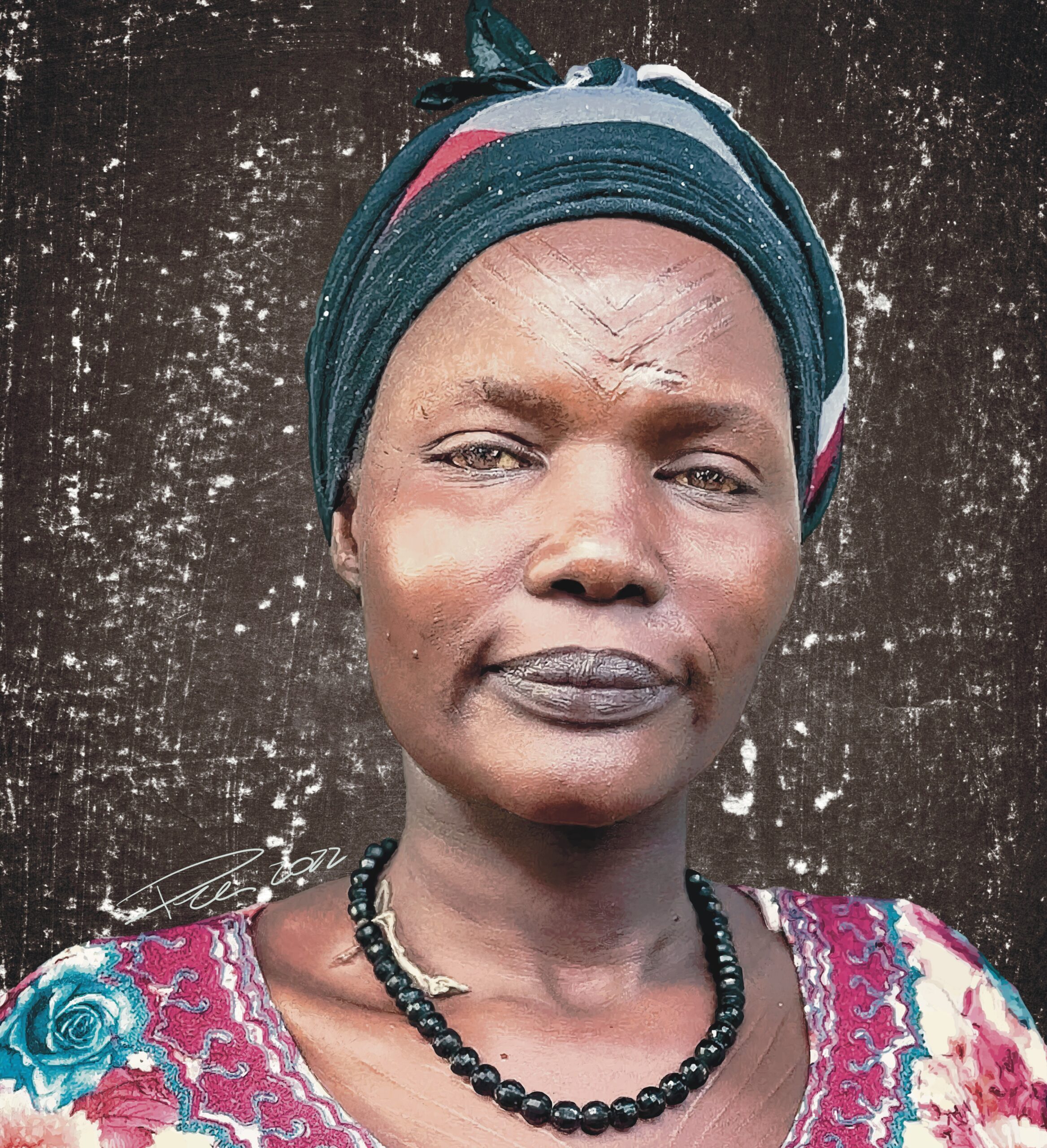
Portrait of a Mundari woman, South Sudan
The Mundari are a small Nilotic ethnic group living in South Sudan. This people is renowned worldwide for its agro-pastoral lifestyle and its symbiotic, visceral bond with its cattle.
While for men, forehead markings signify courage and the transition to adulthood, the story behind the scars (scarification) of Mundari women is linked to beauty, cultural identity, and health.
The motivations and profound meanings behind these geometric patterns etched onto the women’s skin are manifold:
– Standards of beauty and sensuality
– Social status and tribal affiliation: Facial scars (usually “V”-shaped patterns or small series of lines) serve as a visual identity card. They allow a woman to be immediately identified as a member of the Mundari people, distinguishing her from women of rival ethnic groups.
– Strength and emotional maturity
– Medicinal scarring
- TECHNIQUE: Digital drawing in Procreate – hand-drawn
- YEAR: 2022
- FORMAT: Upon request
- PRINT MEDIUM: Aluminum Dibond
- REFERENCE PHOTO FOR DRAWING: Roberto Pazzi
- CERTIFICATE OF AUTHENTICITY: Included
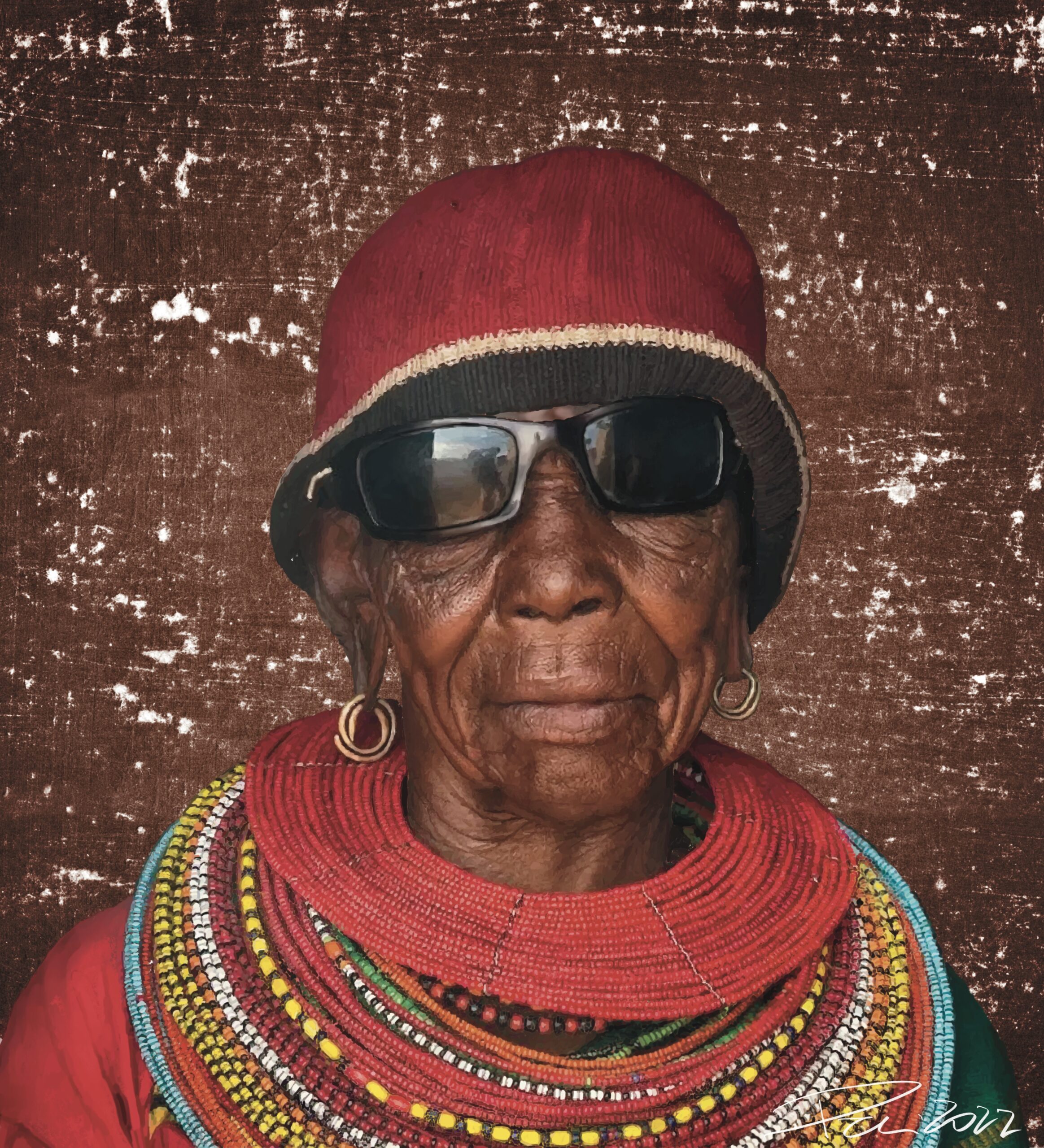
Portrait of a Samburu woman, Maralal, Kenya
The Samburu are a Nilotic people of nomadic and semi-nomadic herders living in north-central Kenya.
They are also known as the “Butterfly People” due to the incredible explosion of colors, vibrant clothing, and beadwork that characterizes their attire. Samburu aesthetics constitute a complex form of visual communication. Every color, piece of fabric, or layer of beads precisely indicates age, social status, gender, and role within the clan.
- TECHNIQUE: Digital drawing in Procreate – hand-drawn
- YEAR: 2022
- FORMAT: Upon request
- PRINT MEDIUM: Aluminum Dibond
- REFERENCE PHOTO: David Dhaen
- CERTIFICATE OF AUTHENTICITY: Included