
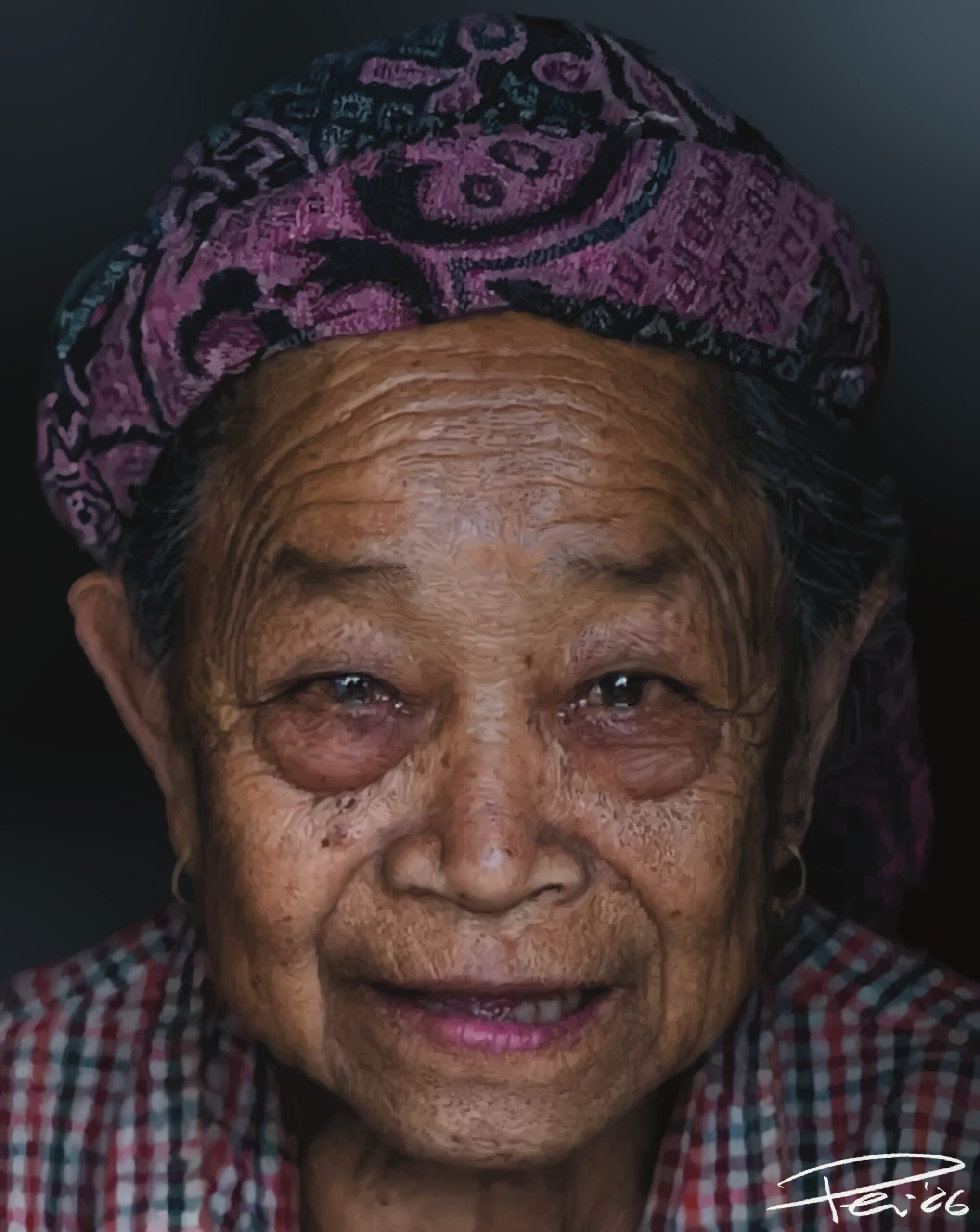
Portrait of an elderly woman from Laos, Southeast Asia
In Laos, the headscarf or head covering is a central element of cultural identity, varying significantly depending on ethnicity and the occasion. There is no single “national” style, but rather a mosaic of traditions utilizing hand-woven silk and cotton.
The fabric is primarily used in two ways:
Phaa Biang (ceremonial silk): often worn as a shoulder scarf, it can also be wrapped around the head in religious or formal settings.
Ethnic headwear (hill tribes): women from minority groups (such as the Hmong, Akha, or Yao) wear elaborate turbans that indicate their marital status and clan affiliation.
Protective headscarf: during daily work in the fields, women use simple cotton scarves wrapped as turbans to protect themselves from the sun.
- TECHNIQUE: Digital drawing in Procreate – hand-drawn
- YEAR: 2026
- FORMAT: Upon request
- PRINT MEDIUM: Aluminum Dibond
- REFERENCE PHOTO: Jake Norris
- CERTIFICATE OF AUTHENTICITY: Included
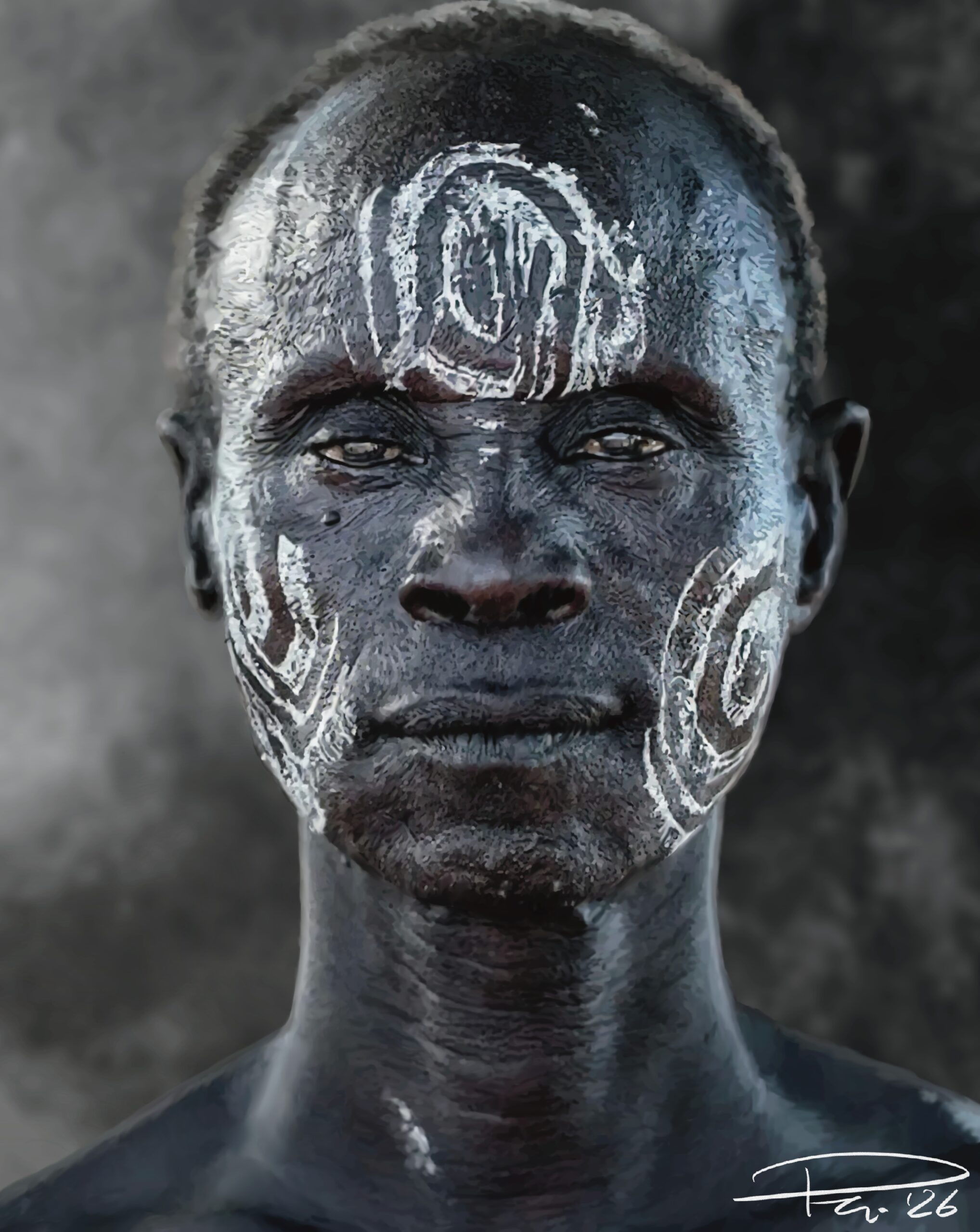
Portrait of a man from the Karo tribe, Ethiopia
The Karo are a small agro-pastoral ethnic group of approximately 2,000 people living in the Lower Omo Valley of southwestern Ethiopia. They are considered the most colorful tribe in Africa. Their body and face painting is not merely decorative; it also reveals social status, age, and personal history. They also practice elaborate scarification on the chest and face.
- TECHNIQUE: Digital drawing in Procreate – hand-drawn
- YEAR: 2026
- FORMAT: Upon request
- PRINT MEDIUM: Aluminum Dibond
- REFERENCE PHOTO: Francesco Otranto
- CERTIFICATE OF AUTHENTICITY: Included